 By Colin Foster
Updated November 2026
The best tips for cooking over a campfire come down to one thing: managing heat. If you learn to build a usable bed of coals, control distance and airflow, and plan your food around the fire, you can cook everything from eggs to steak without scorching the outside or leaving the middle raw. This guide walks through the steps that matter most.
Build a Coal Bed, Not a Bonfire
Flames are the enemy of good campfire cooking. Open flames char food quickly while the center stays cold. Let your fire burn down for 30 to 45 minutes after it gets going, until you have a bed of glowing red coals with only occasional flicker. That bed gives you steady, even heat that you can feel on your hand held about 6 inches above it.
Shopping for one? See our guide: 7 Best Racks for Cooking Over Campfire Options Compared (2026).
Control Heat by Adjusting Distance and Airflow
Your grill grate or cooking surface should sit at a height you can adjust. Most campers use a grate that is 4 to 6 inches above the coals for direct cooking and 8 to 10 inches for slower foods. Spread coals out to create hot and cool zones so you can move food away from the heat when it starts to brown too fast. Fanning the coals with a lid or piece of cardboard raises temperature, while letting the fire settle lowers it.
Plan Your Cooking Order and Food Prep
Cook thicker, slower foods first, then move to quicker items as the coals lose heat. Prep everything at home: cut meat into even pieces, pre-measure seasonings in small bags, and pre-chop vegetables. Wrap delicate foods in heavy-duty foil with a splash of oil or butter so they steam instead of burning.
Essential Campfire Cooking Checklist
- Fire starter and dry kindling
- Adjustable grate or tripod with hooks
- Long-handled tongs and a spatula
- Heat-resistant gloves
- Heavy-duty foil and cast iron or a sturdy pan
- Water bucket or sand for emergencies
- Instant-read thermometer for meat
Know Safe Internal Temperatures
Campfire heat is uneven, so you cannot judge doneness by color alone. The USDA specifies 165°F for poultry, 160°F for ground meat, and 145°F for whole cuts of beef, pork and fish, with a rest time for whole cuts. A digital probe thermometer removes the guesswork. If you are cooking for vulnerable guests or are unsure about food safety, consult a food safety professional or your local health guidance.
Common Mistakes to Avoid
- Cooking over flames instead of waiting for coals.
- Putting cold food straight onto a very hot grate, which causes sticking.
- Leaving sugary sauces on too early, which burn within minutes.
- Forgetting that metal handles and cookware get dangerously hot.
- Cooking with a fire that is too large for the space you have.
Recommended Gear
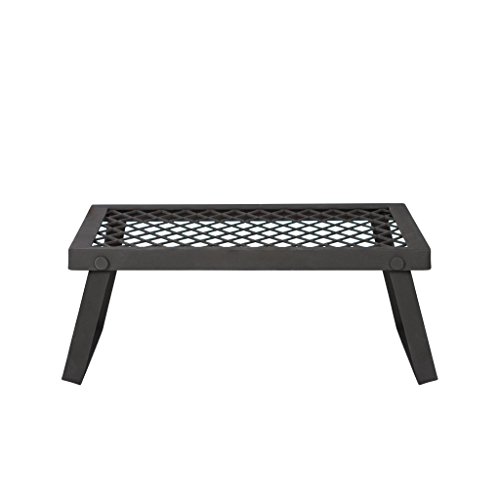
A sturdy adjustable grate lets you raise or lower food with a single turn, which is the easiest way to manage heat. View on Amazon
Long-handled tongs keep your hands well away from the fire while you flip food. View on Amazon
Heat-resistant gloves protect your hands when you adjust hot cookware or grates. View on Amazon
For more on specific setups, see Cooking Over the Campfire: A Step-by-Step Guide for Beginners and Tools for Campfire Cooking: 8 Essentials and How to Use Them. If you want to compare cookware, Which Pans for Campfire Cooking Work Best? 5 Types Compared covers the options.
FAQ
How long should I wait before cooking over a campfire?
Wait 30 to 45 minutes after the fire is lit, until you have a steady bed of glowing coals with few flames. This usually gives you the even heat you need for most foods.
How do I keep food from burning on the outside?
Raise the grate, spread coals to create a cooler zone, and move food away from the hottest spot when it starts to brown too fast. Wrapping delicate items in foil also helps.
Do I need a thermometer for campfire cooking?
For meat, yes. Heat from a fire is uneven, so color is an unreliable guide. An instant-read thermometer helps you confirm safe internal temperatures.
Conclusion
Good campfire cooking depends on coals, distance and patience more than on fancy equipment. Wait for a steady bed of coals, adjust your grate height, and check temperatures before you serve. With those habits in place, your results will improve on every trip.
Related reading
- Top 5 Tripods for Cooking Over Campfire Picks Compared (2026)
- Recipes for Cooking Over a Campfire: 7 Easy Meals for Beginners
Ready to choose one?
About Colin Foster
Colin Foster is part of our editorial team and reviews and edits our camping know-how guides, checking product details against manufacturer specifications and owner feedback.