By Brooks Russell
Cooking over a campfire is one of the most satisfying parts of any trip, but it goes much better with the right gear. The best tools for campfire cooking do three jobs: they keep your hands and arms well away from the heat, they handle food that would otherwise fall through grates or scorch, and they hold up to smoke, soot and repeated trips in and out of the fire. This guide covers nine products across the main categories campers actually use, including skewers, grill grates, Dutch ovens, pie irons, pot grabbers and fire-tending tools. The selection is based on published specifications, brand reputation and the patterns owners tend to report, not on any hands-on testing by our team. Use it as a starting point, then match the picks to how you cook, how many people you feed and how you travel.
Our Top Picks
Quick Comparison
| Product | Best for | Key feature |
|---|---|---|
| Stansport Stainless Steel Campfire Grill Grate | Grilling meat, fish and vegetables directly over coals | Adjustable legs for setting cooking height |
| Lodge Cast Iron Dutch Oven, 12 Quart | Stews, bread and feeding a group | Lid with a raised rim for holding coals |
| Lodge 10.25 Inch Cast Iron Skillet | Frying, searing and breakfast | Pre-seasoned cast iron that gets better with use |
| Stanley Adventure Camp Cook Set | Boiling water, coffee and one-pot meals | Nesting pieces that pack down small |
| Coleman Campfire Cooking Grill Basket | Hard-to-flip foods like fish and burgers | Hinged wire basket with a long handle |
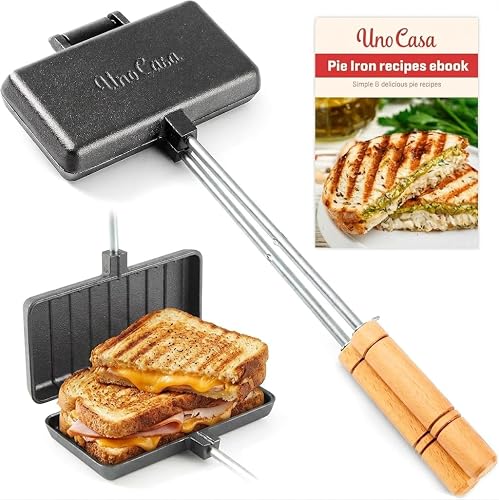
| Pie iron (cast aluminum sandwich maker) | Pizza pockets, grilled sandwiches and dessert | Sealed edges that trap filling |
| Hinged campfire skewer set | Kebabs, hot dogs and marshmallows | Multiple long skewers that stay cool to the touch |
| Heavy-duty campfire pot grabber | Lifting hot pots, lids and Dutch ovens | Spring-loaded jaws with a locking hinge |
| Campfire fire tending tool set | Moving logs, raking coals and adjusting the fire | Poker, rake and shovel in one kit |
Lodge Cast Iron Dutch Oven, 12 Quart
Who it’s for: Groups of four or more and anyone who wants to bake bread, simmer chili or braise a roast over coals.
Key specs
- Material: pre-seasoned cast iron
- Capacity: 12 quarts
- Lid with a raised rim to hold coals on top
- Includes a bail handle for hanging or lifting over a fire
Pros
- Holds heat evenly, so food cooks without constant stirring
- Lid rim keeps coals from sliding off during baking
- Very durable and can last for decades with basic care
Cons
- Heavy to carry on foot, so it suits car camping best
- Needs to be dried right away and re-oiled to prevent rust
Stansport Stainless Steel Campfire Grill Grate
Who it’s for: Campers who want to grill steaks, chicken or vegetables directly over a bed of coals.
Key specs
- Material: stainless steel grate
- Adjustable legs for changing cooking height
- Designed to sit over an open fire ring
Pros
- Stainless steel resists rust better than bare steel
- Adjustable height gives control over searing versus slow cooking
- Simple design that is easy to clean after a meal
Cons
- Small grilling surface for large groups
- Food can fall through wide gaps when cooking small items
Lodge 10.25 Inch Cast Iron Skillet
Who it’s for: Anyone cooking breakfast, eggs, bacon or pan-seared meals at the campsite.
Key specs
- Material: pre-seasoned cast iron
- Diameter: 10.25 inches
- Oven and campfire safe
Pros
- Retains heat well, so it stays steady over uneven coals
- Pre-seasoned surface gives decent nonstick performance from the start
- Works on grates, in the coals or on a camp stove
Cons
- Heavy for backpacking, so it suits car camping and base camps
- Acidic foods such as tomato sauce can strip seasoning if left in the pan
Stanley Adventure Camp Cook Set
Who it’s for: Small groups and solo campers who need pots for boiling water, coffee and simple one-pot dinners.
Key specs
- Material: stainless steel with heat-resistant handles
- Nesting design for compact packing
- Includes pots and lids that fit together
Pros
- Nests together, saving space in a vehicle or pack
- Stainless steel is easy to scrub clean after smoky cooking
- Good choice for boiling water over both fire and stove
Cons
- Thin walls can scorch food if left unattended over direct flame
- Not large enough for big family meals
Coleman Campfire Cooking Grill Basket
Who it’s for: Campers who cook fish, burgers, sliced vegetables or other foods that stick or fall apart on a regular grate.
Key specs
- Hinged wire basket that closes around food
- Long handle to keep hands back from the flames
- Sized for single servings or small batches
Pros
- Lets you flip delicate food without tearing it apart
- Long handle keeps your hands well clear of heat
- Useful for cooking many small items at once
Cons
- Wire can bend under heavy loads or rough handling
- Small capacity compared with a full grill grate
Pie Iron (Cast Aluminum Sandwich Maker)
Who it’s for: Families and scouts who want hot sandwiches, pizza pockets or fruit pies with almost no cleanup.
Key specs
- Material: cast aluminum with long handles
- Two hinged halves that clamp shut
- Designed to be held directly over coals
Pros
- Sealed edges keep fillings inside while cooking
- Cooks quickly over a bed of hot coals
- Simple to use and easy for kids to operate with supervision
Cons
- Only makes one serving at a time
- Fillings can boil over if the seal is not tight
Hinged Campfire Skewer Set
Who it’s for: Anyone making kebabs, hot dogs or marshmallows, especially families with children.
Key specs
- Stainless steel or heavy-gauge wire construction
- Long shafts, often 24 inches or more
- Usually sold in sets of several skewers
Pros
- Long length keeps hands well away from the fire
- Multiple skewers let you cook for a group at once
- Inexpensive way to add variety to campfire meals
Cons
- Thin wire can bend under heavy meat or vegetables
- Food can spin on round skewers unless pushed onto flat sections
Heavy-Duty Campfire Pot Grabber
Who it’s for: Anyone lifting hot lids, pots or Dutch ovens off a fire, where a standard kitchen pot holder is not enough.
Key specs
- Spring-loaded jaws with a locking hinge
- Long reach to keep hands clear of flames
- Steel construction for heavy loads
Pros
- Locking hinge stays closed while carrying a heavy pot
- Long reach protects hands and forearms
- Also useful for moving hot rocks, logs and grill parts
Cons
- Can slip on smooth or rounded handles if not adjusted carefully
- Bulky to store unless it folds or clips to a pack
Campfire Fire Tending Tool Set
Who it’s for: Anyone who needs to build, shape and rake a fire bed that cooks evenly, especially for Dutch oven cooking.
Key specs
- Typically includes a poker, rake and shovel
- Long steel handles for safe reach
- Designed for moving coals and logs
Pros
- Lets you rake coals into an even bed for steady heat
- Covers several fire tasks with one kit
- Helps keep fire rings tidy and safe
Cons
- Several pieces to pack and keep track of
- Thin tines on some sets can bend under heavy use
Buying Guide
Choosing the right tools starts with how you cook. A camper who mostly makes hot dogs and s’mores has very different needs from someone baking bread in a Dutch oven for six. The points below will help you narrow down the list and avoid buying gear you will not use.
Selection Criteria
- Distance from heat: Look for handles or tools at least 18 to 24 inches long for open-fire work.
- Material: Cast iron holds heat well, stainless steel resists rust and aluminum is light but can warp under high heat.
- Portability: Consider whether you hike in, paddle in or drive to the site.
- Group size: Match cooking surface and capacity to the number of people you feed.
Important Features
- Locking hinges or secure clamps that stay closed under load
- Heat-resistant handles, either long or insulated
- Flat or non-round surfaces on skewers to keep food from spinning
- Nesting or folding designs for compact storage
Specs to Check
- Overall length of handles and skewers
- Material thickness, especially for wire and thin steel
- Diameter and capacity of pots, skillets and Dutch ovens
- Whether the product is pre-seasoned, if it is cast iron
Choosing by Need
- Baking and stews: A cast iron Dutch oven, plus a pot grabber and fire tending set.
- Grilling meat and vegetables: A grill grate, plus a grill basket for smaller items.
- Quick snacks and kid meals: A pie iron and a skewer set.
- Light packing: A nesting cook set and a compact pot grabber.
Things to Watch Out For
- Do not leave cast iron wet, as it rusts quickly.
- Avoid plastic or rubber handles near direct flame, as they can melt or crack.
- Thin aluminum can warp when set directly on hot coals.
- Always check local fire restrictions before cooking over an open flame.
FAQ
What is the most important tool for campfire cooking?
A long-handled pot grabber or fire-safe lifting tool is usually the most important, because it lets you move hot cookware without burning your hands. For open-fire cooking, the second most useful item is a sturdy grill grate.
Do I need cast iron for campfire cooking?
Cast iron is not required, but it handles direct heat and coals very well and lasts for years. Lighter options like stainless steel or aluminum work well for shorter trips or backpacking, though they can scorch more easily over direct flame.
How long should campfire cooking tools be?
For cooking over an open fire, handles and skewers around 18 to 24 inches long keep your hands well clear of the heat. Shorter tools can work for low, controlled fires but are harder to use safely over larger flames.
How do I keep cast iron from rusting after a trip?
Clean the pan while it is still warm, dry it completely and rub a thin layer of cooking oil over the surface. Store it in a dry place. Manufacturers generally recommend this routine for maintaining pre-seasoned cast iron.
Can I use a pie iron on a gas stove at home?
Many pie irons are designed for open flame or coals and are not meant for household stovetops. Check the manufacturer’s instructions before using one indoors, and do not leave any open-flame tool unattended.
Are skewers safe for kids to use?
Long skewers can be safe for children when an adult supervises and the child keeps their hands behind the handle, well away from the fire. Choose skewers with rounded or blunt tips where possible, and store them safely when not in use.
Do I need a fire tending tool set if I already have a grate?
A fire tending set is useful for building an even bed of coals, which is what most open-fire cooking depends on. A grate alone will work, but you will have more control over heat with a rake and poker.
Conclusion
The best tools for campfire cooking depend on what you plan to make. For baking, stews and feeding a crowd, a cast iron Dutch oven paired with a sturdy pot grabber is hard to beat. For grilling meat and vegetables, a grill grate and a grill basket cover most needs. Families looking for quick, fun meals will get the most use from a pie iron and a skewer set. Campers who hike in should lean toward a nesting cook set and a compact pot grabber to keep weight down. Whatever you choose, prioritize long handles, secure locking parts and materials that suit your style of travel.
For more on setting up a safe cooking area, see Campfire Safety: Building, Watching and Putting Out a Fire and Camp Cooking Basics: Stoves, Fires and Cooking Safely Outdoors. If you are still planning your camp layout, How to Organize a Campsite: Sleeping, Cooking and Storage Areas shows where a cooking station fits best. And if you want a stove option for days when a fire is not allowed, Best Camping Stoves for Outdoor Cooking: 6 Stoves Compared covers the alternatives.

About Brooks Russell
Brooks focuses on practical advice for camping know-how: what matters before you buy, what to skip, and how to get more out of what you already own.